Heavenly Bamboo天竹
Rhythm, space and the spirit of bamboo.竹的节奏、空间与精神。
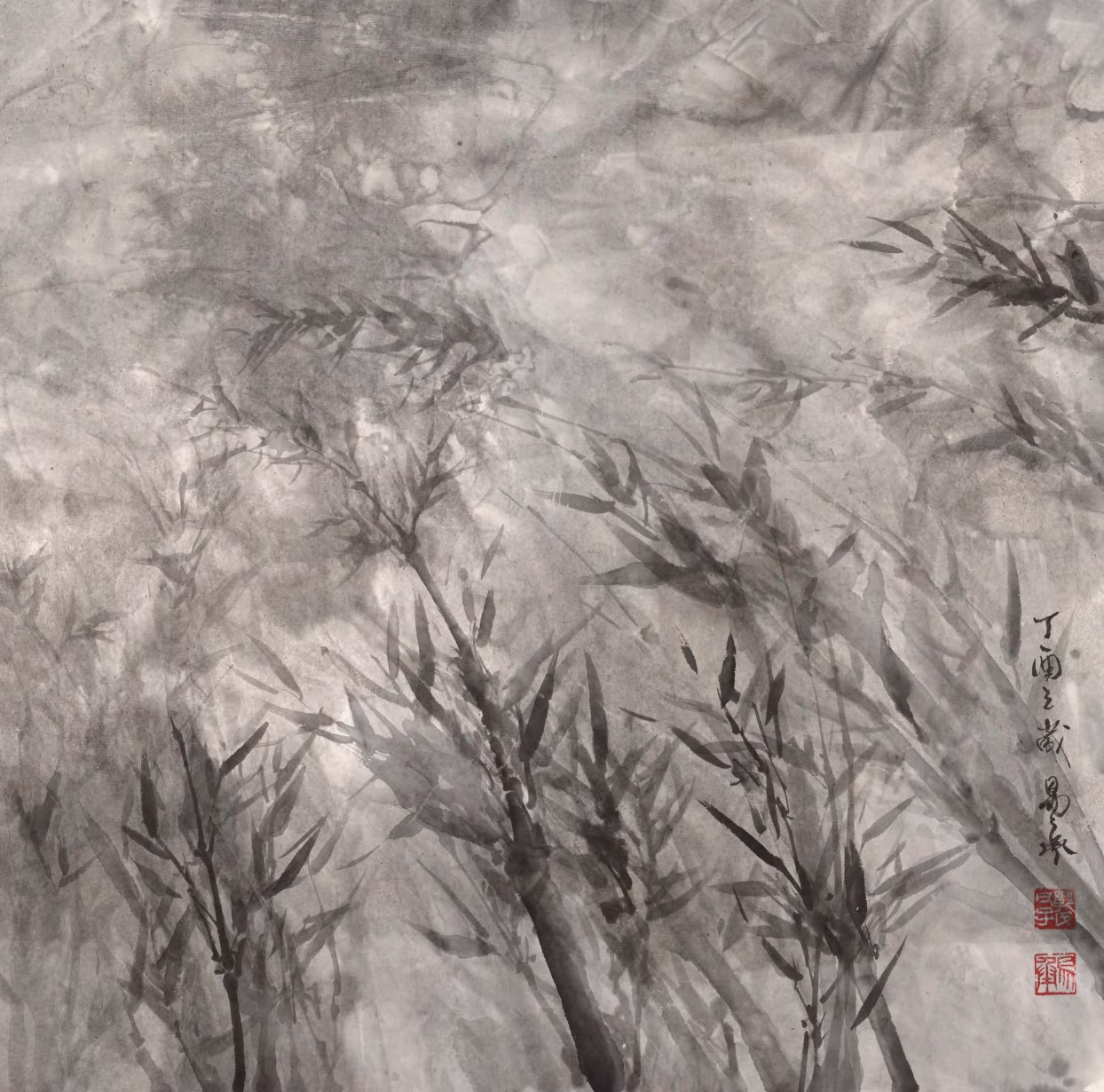
Between sky and bamboo天与竹之间
The catalogue’s preface brings together two symbolic registers: the sky as a horizon beyond the individual, and bamboo as an image of humility. The title also draws on the sound of Tianzhu, linking the series to the cultural movement of Buddhist and Zen thought. These associations form the artist’s account of an ideal way of living.画册前言把“天”与“竹”放在两种相互回应的意义中:天引向超越个体的广阔天地,竹引向虚心的品格。题名也借由“天竺”的同音,联系佛教与禅的文化流传。这些联想共同构成创作者对理想生命境界的表达。
The opening essay moves between a familiar sky overhead and a world still full of the unknown. Bamboo brings that vastness back into lived experience: a plant present in daily use and also in ideas about character and conduct.开篇文字从抬头可见的天空,写到天之外仍然未知的世界。竹又把这种广阔带回人的生活:它进入日常器用,也寄托着关于品格与行事的想象。
Emptiness, ink and possibility空白、浓墨与可能
White space and dense black are both active in these paintings. One essay considers the dark field as a kind of inward wisdom; another imagines the beginning of sky and life. Looking takes time, because what first seems uniform may open into different experiences for different people.留白与浓黑在画中都发挥作用。一篇文字把深黑的画面联系到内敛的智慧,另一篇则试图描绘天地与生命初生的景象。观看需要停留:初看似乎单一的画面,可能在不同人眼中打开不同的感受。
Clouds offer a related lesson in attention. The catalogue recalls how a child, a student and an adult may each see something different in the same sky. The paintings make room for that capacity to imagine and discover again.云也带来关于观看的提示。画册写到,孩子、学生与成年人面对同一片天空,常常看见不同的东西。作品为这种想象与重新发现的能力留出了空间。
Continue in the original catalogue延伸阅读:原画册
The dark field浓黑与拙境Sky and life天地与生命Looking at clouds观看云的方式Growing with the world与天地共同生长
A bamboo stem emerging through cloud becomes an image of accumulated growth: its visible height depends on years beneath the ground. The accompanying reflection links aspiration with humility and the need to keep growing.冲出云端的一竿竹,被写成不断积累的生命形象:看得见的挺拔,来自地下经年的生长。与画相伴的文字把向上的志向、虚心的态度与持续生长联系起来。
Another essay reads Zhuangzi’s transformation through the relationship between self and world, and turns to Su Shi’s account of painting bamboo. The question is how a person can enter so fully into an experience that boundaries soften. From here, bamboo leaves becoming birds in Free and Easy Wandering extend the enquiry.另一篇文字从庄子的物化谈到人与天地的关系,并引入苏轼论画竹的诗句。它关心人如何深入一种经验,让自我与万物的边界逐渐相通。由此再看《逍遥游》中竹叶向鹏鸟的转化,也能读到这一探索的延续。